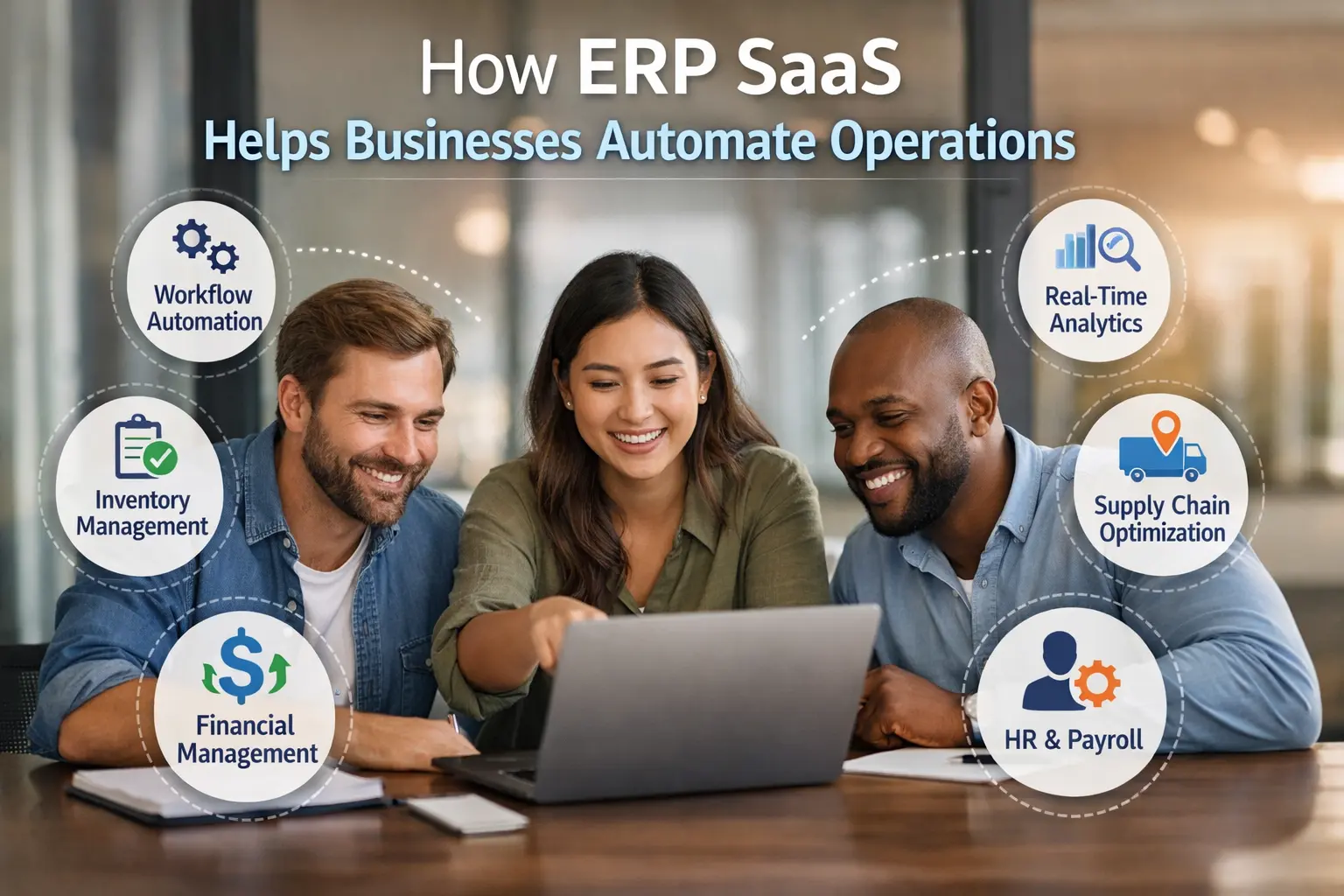
How ERP SaaS Helps Businesses Automate Operations
Introduction
Modern businesses face increasing pressure to operate faster, smarter, and more efficiently than ever before. Companies must manage finances, inventory, sales, customer relationships, human resources, supply chains, and analytics while staying competitive in rapidly changing markets. Traditionally, organizations relied on separate software systems and manual processes to handle these tasks. However, this often resulted in inefficiencies, data silos, human errors, and higher operational costs.
This is where ERP SaaS (Enterprise Resource Planning Software as a Service) becomes a powerful solution. ERP SaaS platforms integrate multiple business processes into a single cloud-based system that automates workflows, improves data visibility, and enhances decision-making.
Today, companies of all sizes—from startups to global enterprises—are adopting cloud ERP systems to automate operations, streamline processes, and improve productivity.
In this article, we will explore how ERP SaaS helps businesses automate operations, reduce manual work, improve efficiency, and scale faster.
What Is ERP SaaS?
ERP SaaS refers to cloud-based enterprise resource planning software delivered through the internet. Instead of installing software on local servers, companies access ERP systems through a web browser.
Traditional ERP systems required expensive hardware, large IT teams, and complex installations. In contrast, SaaS ERP solutions are hosted in the cloud and maintained by providers.
Businesses simply subscribe to the software and access features such as:
- Financial management
- Inventory tracking
- Sales automation
- Customer relationship management
- Supply chain management
- HR and payroll
- Reporting and analytics
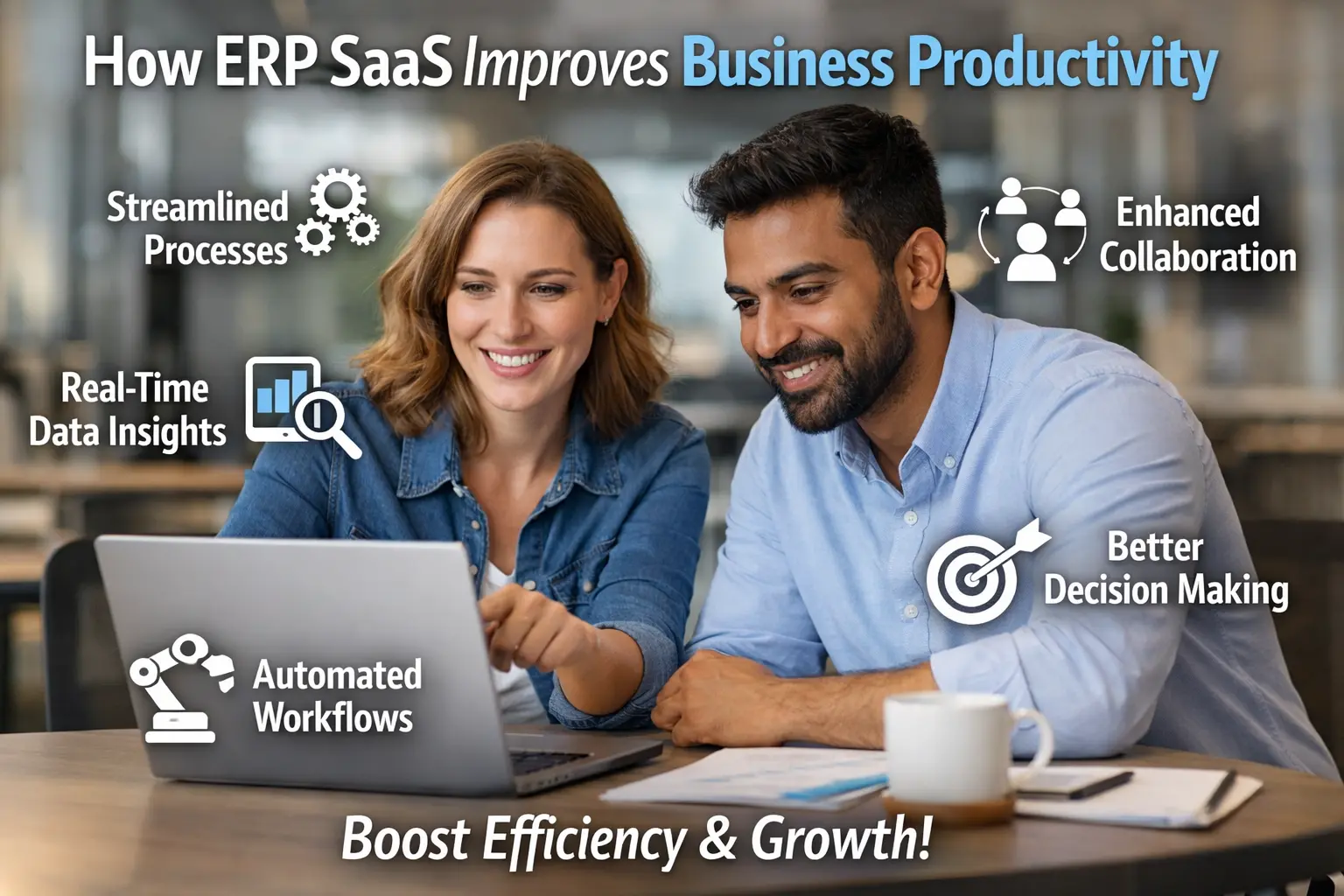
Because ERP SaaS platforms integrate multiple business functions into one centralized system, they enable businesses to automate operations more efficiently.
Key Features of ERP SaaS Systems
ERP SaaS platforms provide several powerful features designed to automate complex business operations.
1. Cloud-Based Access
Cloud ERP allows employees to access business data anytime and anywhere using internet-connected devices.
Benefits include:
- Remote work support
- Real-time data access
- Lower IT infrastructure cost
- Automatic software updates
Keywords included: cloud ERP, SaaS ERP software, cloud business software, remote business management.
2. Integrated Business Processes
ERP SaaS integrates departments such as:
- Accounting
- Sales
- Inventory
- Human resources
- Procurement
- Customer support
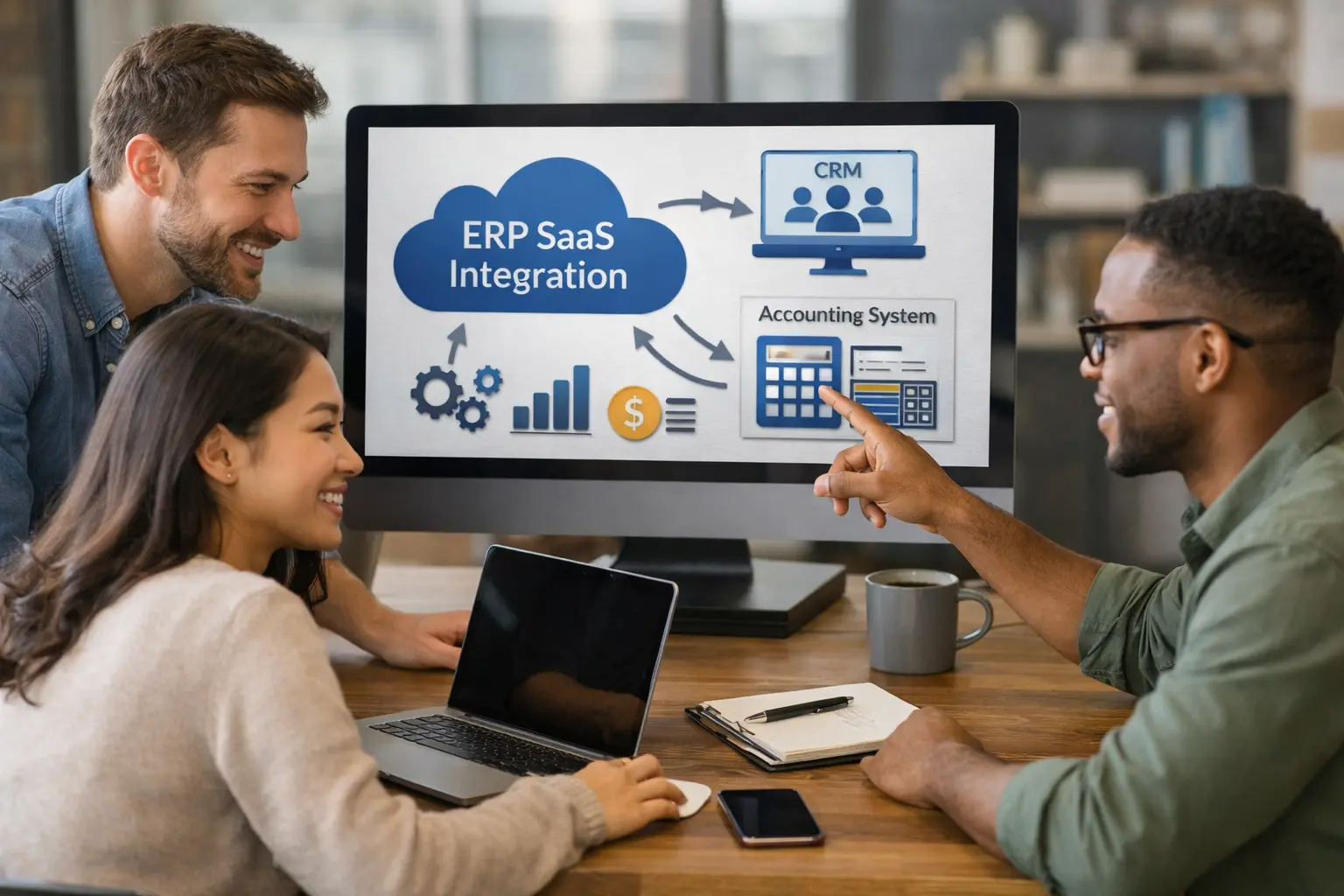
This integration eliminates disconnected systems and enables automated workflows between departments.
Keywords included: ERP integration, business process automation, unified business platform, enterprise software integration.
3. Real-Time Data and Analytics
ERP SaaS provides real-time reporting and analytics dashboards that help managers monitor operations.
Companies can track:
- Sales performance
- Inventory levels
- Customer behavior
- Financial reports
- Operational efficiency
Keywords included: business analytics software, real-time reporting, ERP dashboards, data-driven decision making.
How ERP SaaS Automates Business Operations
Automation is the biggest advantage of ERP SaaS. Let’s explore how ERP systems streamline different business operations.
1. Financial Management Automation
Managing finances manually can be time-consuming and error-prone. ERP SaaS automates financial processes including:
- Invoice generation
- Payment processing
- Expense tracking
- Financial reporting
- Tax calculation
With ERP automation, businesses can:
- Reduce accounting errors
- Improve cash flow tracking
- Generate automated financial reports
- Ensure regulatory compliance
Keywords included: accounting automation, financial ERP software, automated invoicing, digital accounting systems, cloud accounting tools.
2. Inventory Management Automation
Inventory management is critical for retail, manufacturing, and e-commerce businesses.
ERP SaaS helps automate:
- Inventory tracking
- Stock level monitoring
- Purchase orders
- Warehouse management
- Demand forecasting
With automated inventory systems, companies can prevent stockouts and overstocking.
Keywords included: inventory management software, warehouse automation, stock management ERP, automated supply chain systems.
3. Sales and Order Processing Automation
Sales teams benefit greatly from ERP SaaS automation.
ERP systems automate:
- Sales order management
- Customer quotations
- Order tracking
- Sales analytics
- Billing and invoicing
Sales teams can process orders faster and reduce administrative tasks.
Keywords included: sales automation software, order management ERP, automated sales workflow, CRM ERP integration.
4. Customer Relationship Management (CRM)
ERP SaaS often includes CRM features that help businesses manage customer interactions.
Automation features include:
- Customer data management
- Automated follow-ups
- Lead tracking
- Customer support workflows
- Marketing automation
This improves customer satisfaction and retention.
Keywords included: CRM software, customer management system, marketing automation tools, lead tracking software.
5. Human Resources Automation
HR departments also benefit from ERP SaaS automation.
ERP HR modules automate:
- Employee records
- Payroll processing
- Attendance tracking
- Recruitment management
- Performance evaluation
This reduces administrative work and improves HR efficiency.
Keywords included: HR management software, payroll automation, employee management systems, HR ERP solutions.
6. Supply Chain Automation
Supply chains involve multiple vendors, logistics providers, and inventory systems.
ERP SaaS automates supply chain operations by managing:
- Supplier relationships
- Procurement workflows
- Shipment tracking
- Logistics coordination
- Demand planning
This helps businesses optimize supply chain efficiency.
Keywords included: supply chain management software, procurement automation, logistics ERP systems.
Benefits of ERP SaaS for Business Automation
ERP SaaS provides numerous advantages for companies looking to automate operations.
1. Increased Operational Efficiency
Automation reduces manual tasks and improves workflow efficiency.
Employees can focus on strategic activities rather than repetitive administrative work.
Keywords: operational efficiency, workflow automation, business productivity software.
2. Reduced Operational Costs
ERP SaaS reduces costs by:
- Eliminating manual processes
- Reducing IT infrastructure
- Minimizing operational errors
- Improving resource allocation
Keywords: cost reduction software, cloud business solutions, SaaS cost savings.
3. Improved Data Accuracy
Manual data entry often causes errors.
ERP SaaS ensures data accuracy through automated data synchronization across departments.
Keywords: automated data management, business data accuracy, ERP database systems.
4. Better Decision Making
ERP SaaS provides analytics dashboards that help managers make informed decisions.
Businesses can analyze:
- Revenue trends
- Customer behavior
- Operational performance
Keywords: business intelligence software, ERP analytics tools, predictive business insights.
5. Scalability for Growing Businesses
Cloud ERP systems can easily scale as businesses grow.
Companies can add new modules and users without changing infrastructure.
Keywords: scalable ERP software, cloud scalability, enterprise SaaS solutions.
Industries Using ERP SaaS
ERP SaaS automation is widely used across many industries.
Manufacturing
Manufacturers use ERP SaaS to manage:
- Production planning
- Inventory control
- Supply chains
- Quality management
Keywords: manufacturing ERP software, production planning systems.
Retail and E-Commerce
Retail companies use ERP systems to manage:
- Inventory
- Sales orders
- Customer data
- Omnichannel operations
Keywords: retail ERP software, ecommerce automation tools.
Healthcare
Healthcare organizations use ERP SaaS to manage:
- Medical inventory
- Billing systems
- Staff scheduling
Keywords: healthcare ERP software, hospital management systems.
Financial Services
Banks and financial institutions use ERP SaaS to automate:
- Financial reporting
- Compliance management
- Risk analysis
Keywords: financial ERP solutions, banking automation software.
Challenges of Implementing ERP SaaS
Although ERP SaaS provides many benefits, businesses may face challenges during implementation.
Data Migration
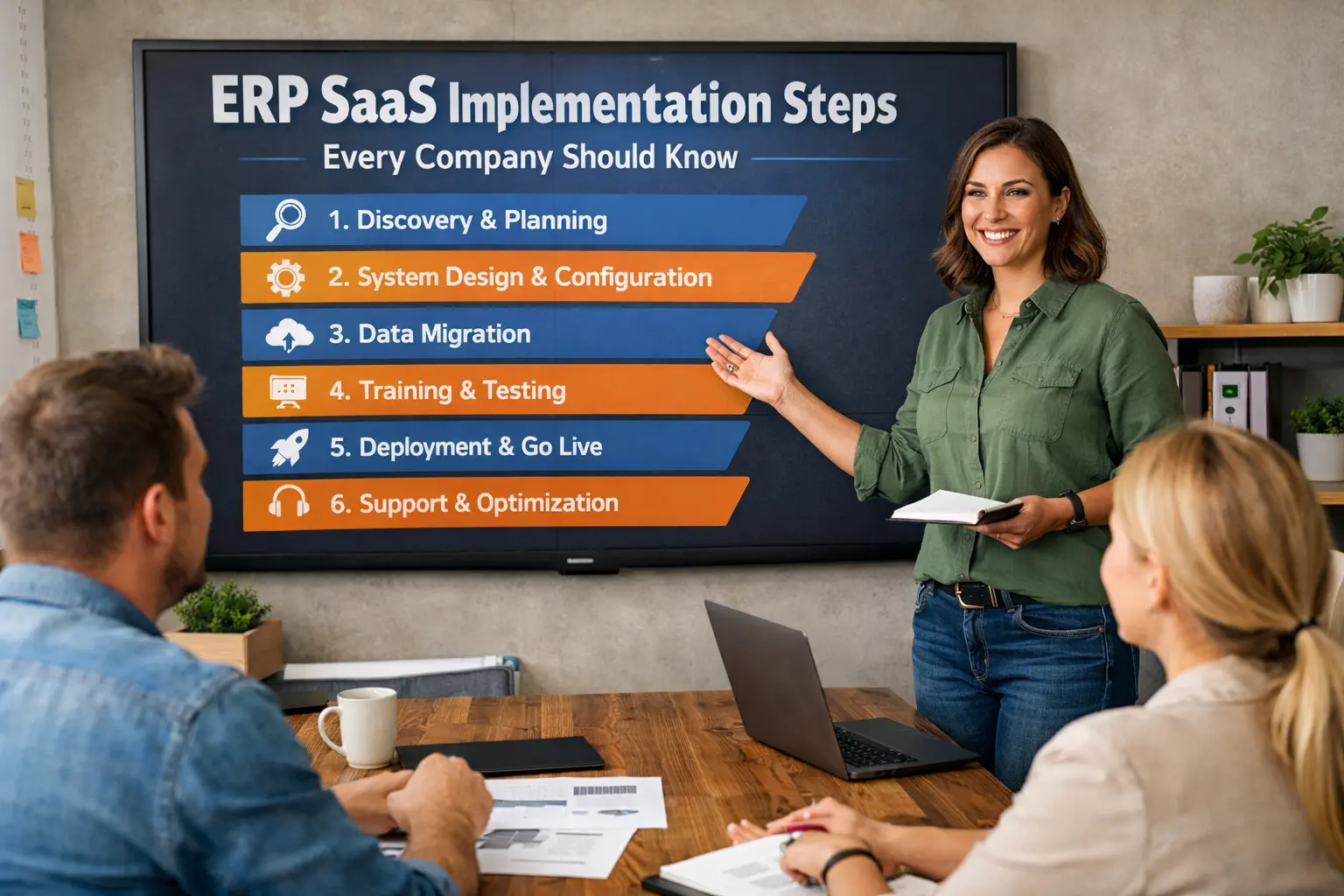
Moving data from legacy systems to ERP platforms can be complex.
Proper data management strategies are required.
Employee Training
Employees must learn how to use the ERP system effectively.
Training programs are essential for successful adoption.
Customization Needs
Some businesses require customized ERP solutions tailored to their workflows.
Future of ERP SaaS and Automation
The future of ERP SaaS is becoming even more powerful with emerging technologies such as:
- Artificial Intelligence
- Machine Learning
- Robotic Process Automation
- Predictive Analytics
- Blockchain integration
These technologies will further automate business operations and provide deeper insights into organizational performance.
Keywords included: AI ERP software, intelligent automation platforms, smart business systems.
Choosing the Right ERP SaaS Solution
When selecting an ERP SaaS platform, businesses should consider:
- Scalability
- Security features
- Integration capabilities
- Customization options
- Vendor reputation
- Cost structure
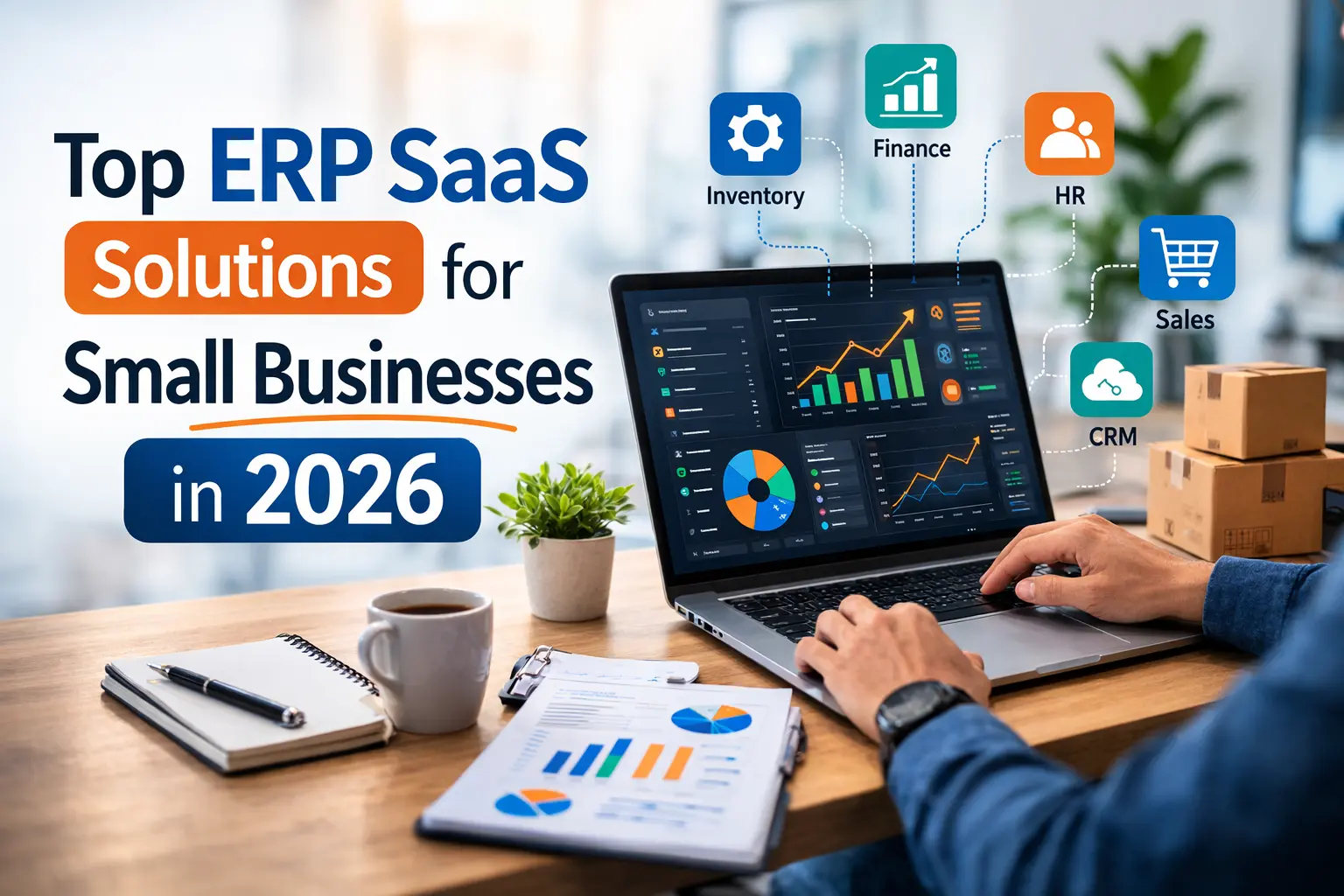
Popular ERP SaaS solutions include:
- SAP ERP Cloud
- Oracle NetSuite
- Microsoft Dynamics 365
- Odoo ERP
- Zoho ERP
Keywords included: best ERP software, enterprise SaaS platforms, cloud ERP vendors.
Conclusion
ERP SaaS has transformed how businesses manage operations. By integrating departments, automating workflows, and providing real-time insights, ERP systems help organizations operate more efficiently and competitively.
From financial management and inventory control to sales automation and HR management, ERP SaaS enables businesses to streamline operations and reduce manual workload.
As digital transformation continues to accelerate, companies that adopt ERP SaaS will gain a significant advantage in automation, scalability, and data-driven decision-making.
For businesses seeking to improve productivity, reduce operational costs, and optimize performance, implementing an ERP SaaS solution is no longer just an option—it is a necessity.