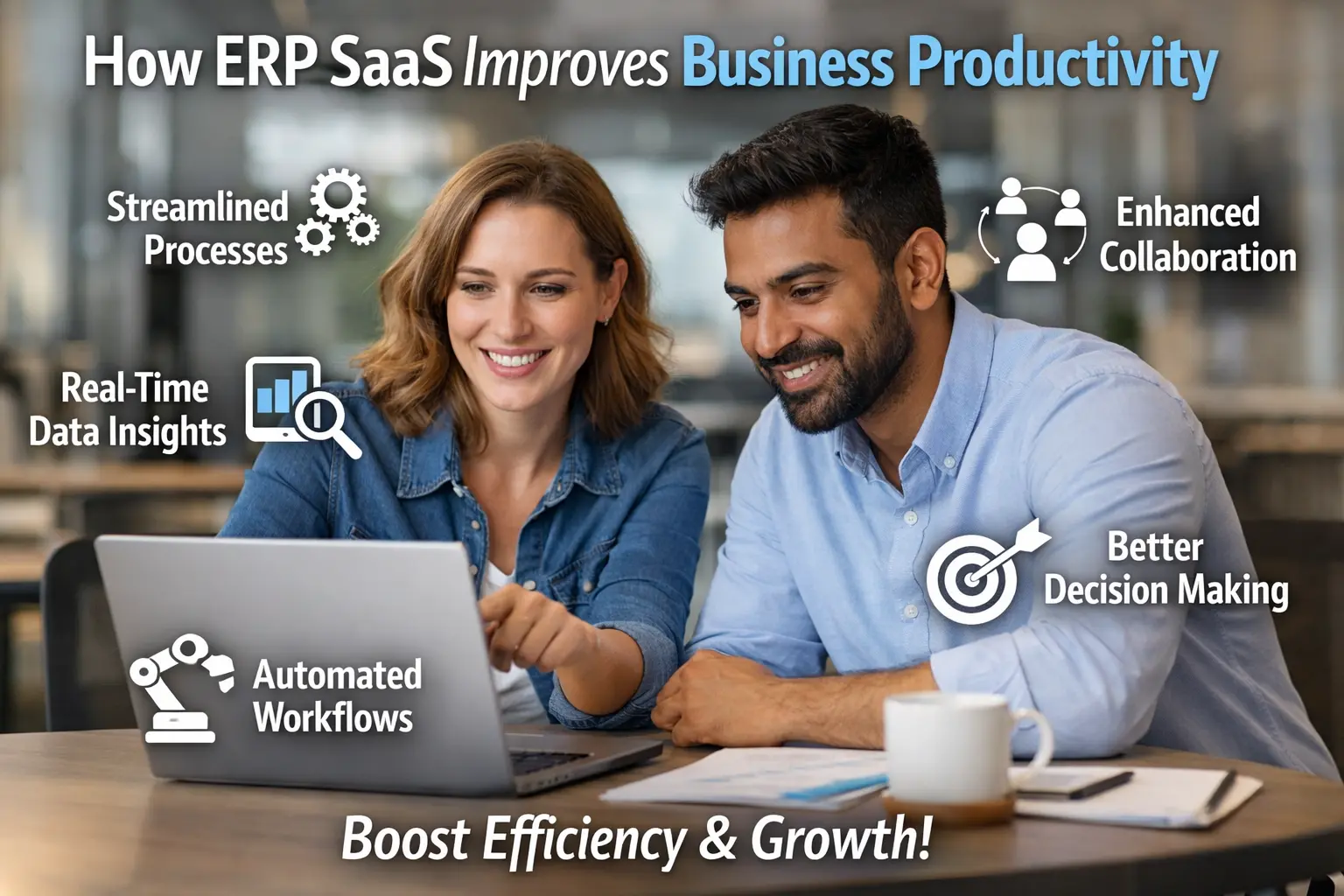
How ERP SaaS Improves Business Productivity
In today’s competitive digital economy, businesses must operate faster, smarter, and more efficiently than ever before. Companies of all sizes are constantly looking for solutions that can streamline operations, reduce costs, and improve productivity. One of the most powerful technologies enabling this transformation is ERP SaaS (Enterprise Resource Planning Software as a Service).
ERP SaaS solutions provide organizations with cloud-based systems that integrate different business functions such as finance, human resources, supply chain, inventory management, customer relationship management, and analytics. Unlike traditional ERP systems that require expensive hardware and complex installations, ERP SaaS operates through the cloud, making it accessible, scalable, and cost-effective.
This article explores how ERP SaaS improves business productivity and why modern organizations are rapidly adopting cloud ERP systems to optimize their operations.
Understanding ERP SaaS
ERP SaaS refers to cloud-based ERP software delivered through a subscription model. Instead of installing software on company servers, businesses access ERP platforms through a web browser or application hosted by a cloud provider.
This technology integrates multiple departments into a single system, allowing employees to access real-time information and collaborate effectively.
Key features of ERP SaaS include:
- Cloud-based deployment
- Automatic updates and maintenance
- Real-time data access
- Scalable infrastructure
- Subscription-based pricing
- Remote accessibility
- Secure data storage
These capabilities make ERP SaaS an essential tool for modern organizations seeking operational efficiency.
Centralized Data Management
One of the most significant ways ERP SaaS improves productivity is by centralizing business data. Many companies struggle with fragmented systems where information is stored in different software applications across departments.
For example:
- Accounting uses one system
- HR uses another platform
- Sales teams rely on CRM software
- Inventory is tracked separately
This lack of integration causes data silos, communication issues, and inefficiencies.
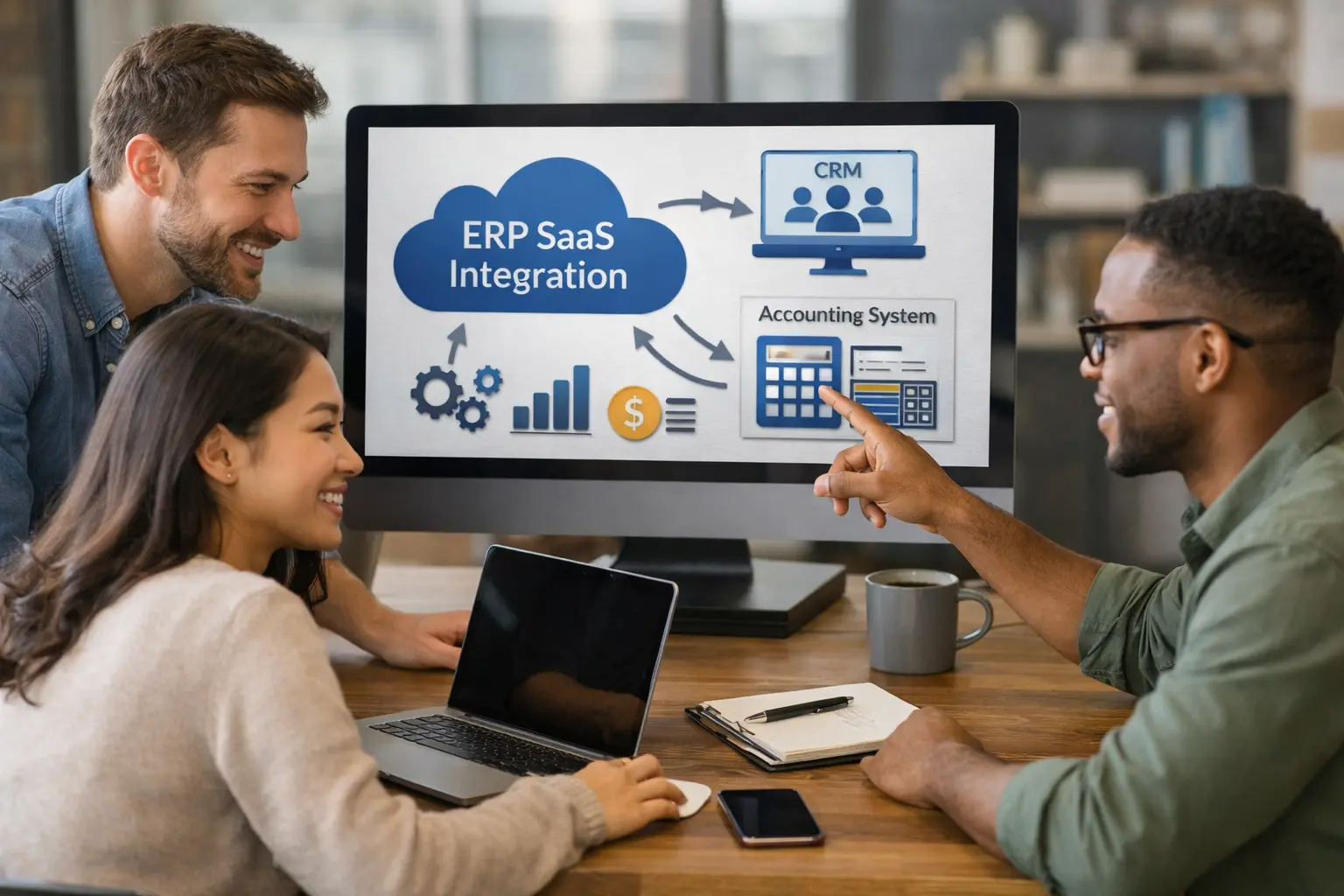
ERP SaaS eliminates these problems by storing all business information in a unified database. Employees can access accurate data in real time, which improves collaboration and decision-making.
Centralized data management reduces duplication, minimizes errors, and ensures everyone works with the same information.
Automation of Business Processes
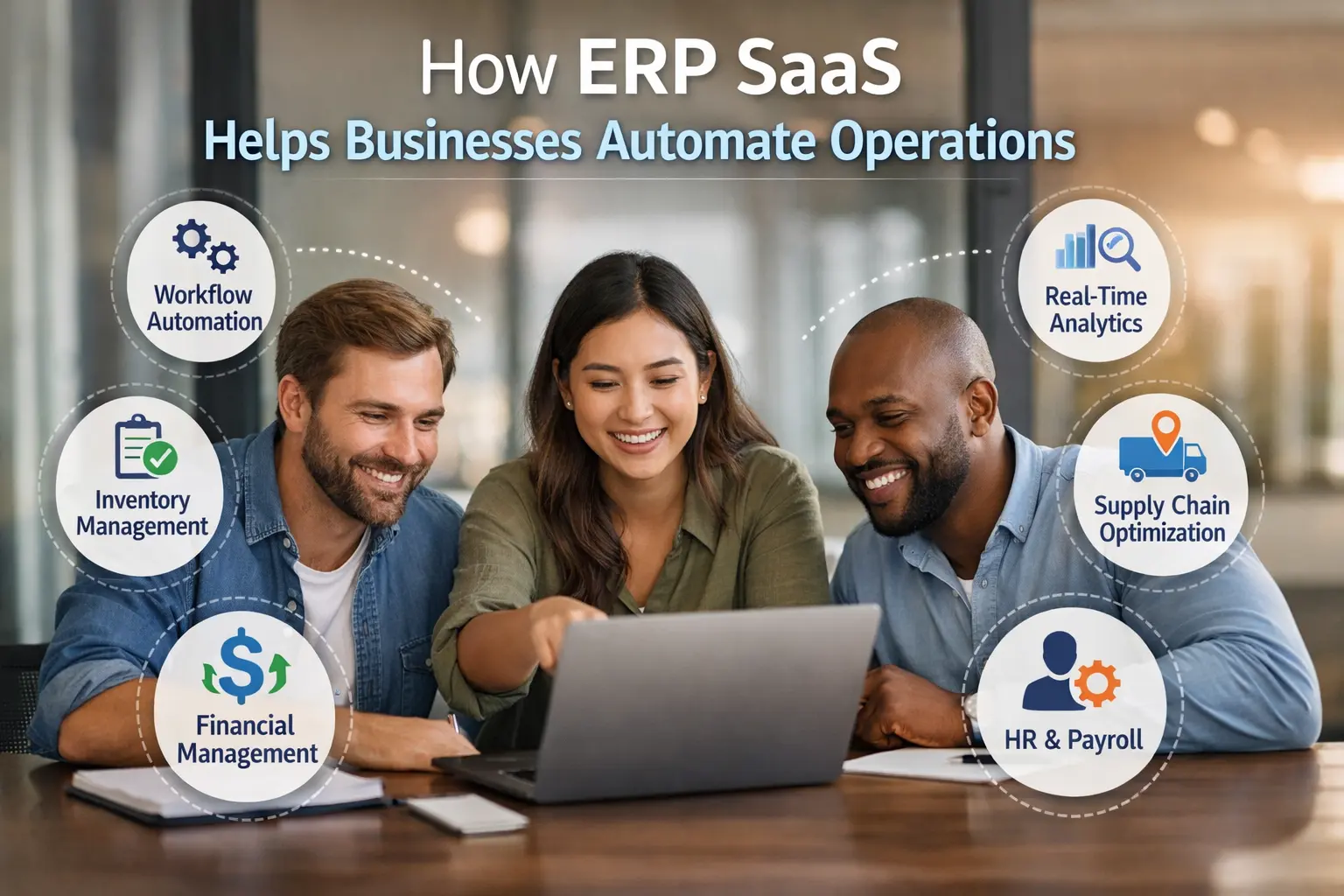
Automation is a key productivity driver in modern organizations. ERP SaaS automates repetitive tasks that previously required manual work.
Examples of automated processes include:
- Invoice generation
- Payroll processing
- Inventory updates
- Order tracking
- Financial reporting
- Procurement workflows
- Customer data management
By automating these tasks, employees can focus on strategic activities rather than routine administrative work.
Automation reduces human error, speeds up processes, and improves operational efficiency.
Real-Time Analytics and Reporting
Data-driven decision making is critical for business success. ERP SaaS systems provide real-time analytics dashboards that give managers a clear overview of company performance.
With advanced reporting tools, businesses can track:
- Sales performance
- Financial metrics
- Inventory levels
- Customer behavior
- Employee productivity
- Supply chain efficiency
Real-time insights allow organizations to identify problems quickly and make informed decisions.
For example, if inventory levels drop unexpectedly, managers can immediately reorder stock before it affects sales.
This capability significantly improves business productivity and operational agility.
Improved Collaboration Across Departments
In traditional business environments, departments often work independently, which leads to communication gaps and inefficiencies.
ERP SaaS integrates all departments into one system, enabling seamless collaboration between teams.
For instance:
- Sales teams can check inventory availability instantly
- Finance teams can monitor real-time transactions
- HR departments can manage employee records centrally
- Procurement teams can track supplier information
This integration ensures that departments share information quickly and accurately.
Improved collaboration reduces delays, enhances workflow efficiency, and boosts overall productivity.
Remote Access and Mobility
One of the biggest advantages of ERP SaaS is the ability to access business systems from anywhere.
Since the software is hosted in the cloud, employees can log in using:
- laptops
- tablets
- smartphones
This remote accessibility is especially valuable for companies with distributed teams or remote workers.
Employees can update data, manage projects, and monitor performance without being physically present in the office.
Mobile access improves flexibility and allows organizations to maintain productivity even outside traditional work environments.
Scalability for Business Growth
As businesses grow, their operational requirements also increase. Traditional ERP systems often struggle to adapt to changing needs because they require hardware upgrades and complex installations.
ERP SaaS platforms offer scalable infrastructure that can grow with the business.
Companies can easily:
- add new users
- expand storage capacity
- integrate additional modules
- support multiple locations
This scalability ensures that organizations do not outgrow their software systems.
By supporting growth without major investments, ERP SaaS improves long-term productivity and operational efficiency.
Cost Efficiency and Reduced IT Expenses
Traditional ERP implementations are expensive and require significant investments in hardware, servers, maintenance, and IT staff.
ERP SaaS significantly reduces these costs because the software is hosted in the cloud.
Companies only pay a subscription fee, which typically includes:
- software updates
- security patches
- technical support
- infrastructure maintenance
This cost-effective model allows businesses to allocate resources more efficiently.
Lower IT expenses free up budgets for innovation, marketing, and strategic initiatives that drive productivity.
Enhanced Data Security
Security is a major concern for businesses managing sensitive data. ERP SaaS providers invest heavily in advanced security technologies to protect customer information.
Security features often include:
- data encryption
- multi-factor authentication
- regular security audits
- automated backups
- disaster recovery systems
These measures ensure that business data remains protected against cyber threats.
Reliable security systems increase trust and allow organizations to operate confidently in the digital environment.
Faster Implementation and Deployment
Traditional ERP systems can take months or even years to implement. The installation process involves hardware setup, software configuration, and extensive testing.
ERP SaaS solutions offer much faster deployment.
Because the infrastructure is already hosted in the cloud, companies can start using the system within weeks.
This quick implementation allows organizations to experience productivity improvements almost immediately.
Integration with Modern Business Tools
Modern businesses rely on multiple digital tools to manage their operations.
ERP SaaS platforms support integration with various applications such as:
- CRM systems
- marketing automation tools
- eCommerce platforms
- payment gateways
- HR management software
- analytics platforms
Integration ensures smooth data flow between systems, eliminating manual data entry and improving workflow efficiency.
This interconnected ecosystem enhances productivity across the entire organization.
Better Customer Experience
Customer satisfaction plays a crucial role in business success.
ERP SaaS systems help companies deliver better customer experiences by providing accurate and real-time information.
For example:
- customer service teams can access order histories instantly
- sales teams can track product availability
- support teams can resolve issues faster
Improved responsiveness increases customer loyalty and strengthens business relationships.
Satisfied customers contribute to long-term productivity and revenue growth.
Supply Chain Optimization
Supply chain management is a complex process involving suppliers, logistics, inventory, and distribution.
ERP SaaS systems streamline supply chain operations by providing real-time visibility into the entire process.
Businesses can monitor:
- supplier performance
- inventory levels
- shipping status
- warehouse operations
This transparency enables companies to optimize supply chains, reduce delays, and minimize costs.
Efficient supply chain management improves operational productivity significantly.
Improved Financial Management
ERP SaaS systems provide powerful financial management tools that help businesses maintain accurate records and improve budgeting.
Key financial features include:
- automated accounting
- expense tracking
- financial forecasting
- tax compliance
- profit analysis
With better financial visibility, organizations can make smarter investment decisions and manage resources effectively.
Strong financial management supports sustainable productivity and business growth.
Employee Productivity and Workforce Management
ERP SaaS platforms also enhance employee productivity by providing tools for workforce management.
HR modules allow businesses to manage:
- employee records
- attendance tracking
- payroll processing
- performance evaluation
- recruitment workflows
These features simplify HR operations and ensure efficient workforce management.
Employees benefit from clear processes and improved communication, which increases overall productivity.
Competitive Advantage for Modern Businesses
Companies that adopt ERP SaaS gain a significant competitive advantage in the marketplace.
Cloud ERP systems allow businesses to operate more efficiently, respond faster to market changes, and make better strategic decisions.
Organizations using ERP SaaS often experience:
- improved operational efficiency
- reduced costs
- faster innovation
- better customer satisfaction
These benefits enable companies to outperform competitors and achieve sustainable growth.