Introduction
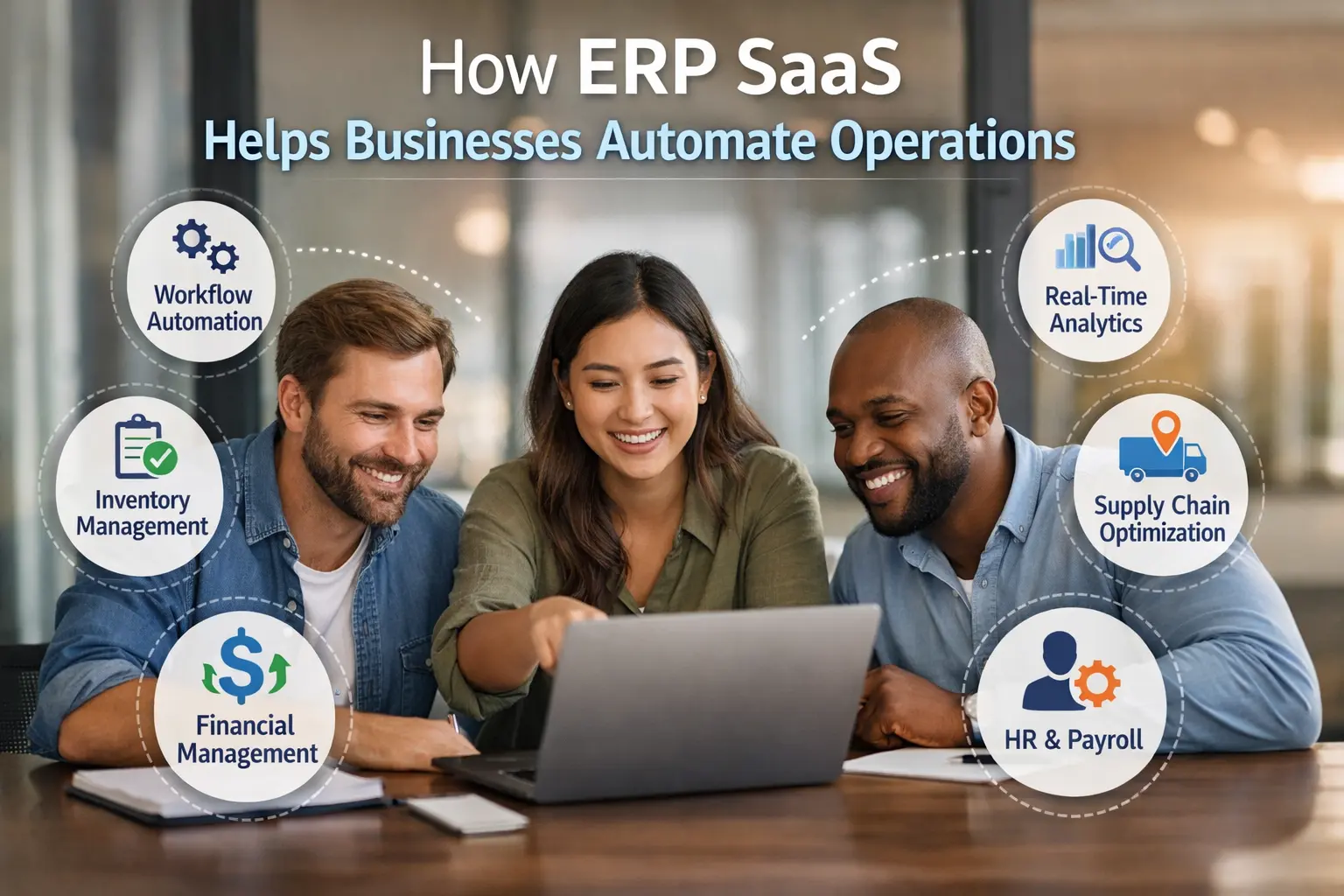
In 2026, digital transformation is no longer optional for businesses. Small and medium-sized enterprises (SMEs) are increasingly adopting ERP SaaS solutions to streamline operations, automate workflows, and manage data efficiently. Enterprise Resource Planning (ERP) systems once required expensive hardware, complex installations, and months of implementation. Today, cloud-based ERP SaaS platforms have revolutionized how businesses manage finance, inventory, supply chain, customer relationships, and human resources.
ERP SaaS systems operate on a subscription-based cloud model, meaning companies can access powerful business management software without investing heavily in infrastructure. These systems integrate different business processes into one centralized platform, enabling real-time insights, automation, and improved decision-making.
For small businesses competing in fast-paced markets, adopting the right ERP SaaS platform can significantly increase efficiency and productivity. With modern features like AI analytics, automation, mobile access, and real-time dashboards, ERP SaaS systems are transforming how companies operate.
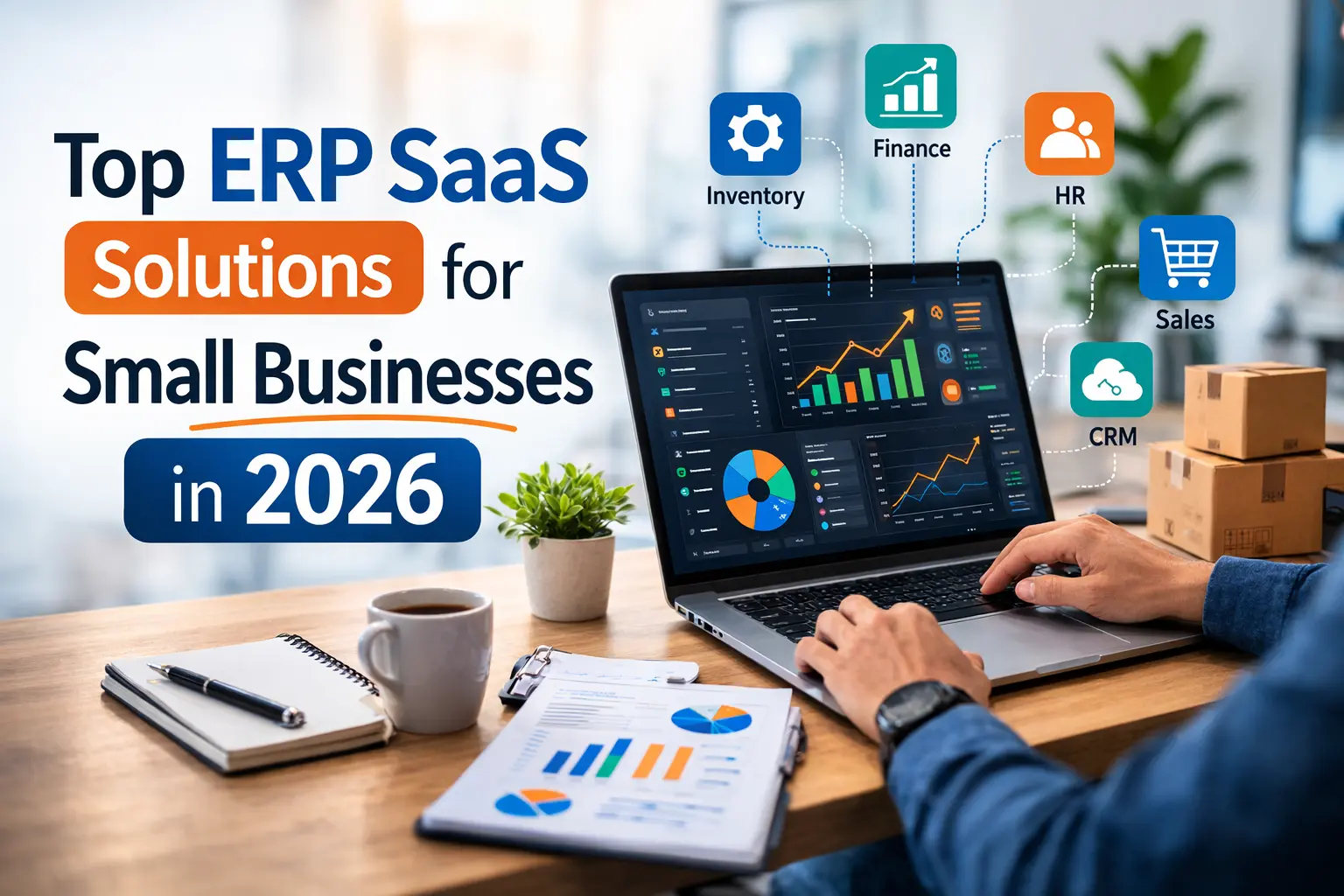
This article explores the top ERP SaaS solutions for small businesses in 2026, their benefits, features, and how to choose the best ERP system for your organization.
What is ERP SaaS?
ERP SaaS (Software as a Service Enterprise Resource Planning) is a cloud-based system that integrates core business processes such as accounting, inventory management, human resources, procurement, sales, and customer relationship management into a single platform.
Unlike traditional ERP systems, SaaS ERP software runs on remote servers managed by the provider and is accessed through the internet. Businesses simply log in through a web browser or mobile application to manage operations.
Key characteristics of ERP SaaS include:
- Cloud-based deployment
- Subscription pricing model
- Automatic software updates
- Real-time data access
- Scalability for growing businesses
SaaS ERP systems also reduce IT infrastructure costs and maintenance since vendors handle security, upgrades, and system management.
Why Small Businesses Need ERP SaaS in 2026
Small businesses face numerous operational challenges such as fragmented systems, manual processes, and lack of real-time data. ERP SaaS platforms solve these problems by centralizing information and automating workflows.
1. Lower Cost of Ownership
Traditional ERP systems require servers, IT staff, and licensing fees. SaaS ERP solutions eliminate these costs by providing a cloud-hosted system with subscription payments.
Companies adopting SaaS ERP can reduce IT costs significantly while gaining access to enterprise-level technology.
2. Faster Implementation
On-premise ERP systems can take months or even years to deploy. In contrast, SaaS ERP solutions can be implemented within weeks, allowing businesses to start benefiting quickly.
3. Real-Time Data and Analytics
Modern ERP SaaS platforms provide real-time dashboards and analytics tools that help business owners track sales, inventory, and financial performance instantly.
4. Scalability
SaaS ERP systems grow with the business. Companies can add users, modules, and features as they expand without replacing their entire system.
5. Remote Access
With cloud-based ERP software, employees can access business data from anywhere, supporting remote work and mobile management.
Key Features of ERP SaaS Platforms
When selecting an ERP SaaS solution, small businesses should evaluate the following features.
Financial Management
ERP SaaS systems provide accounting tools such as invoicing, budgeting, tax management, and financial reporting.
Inventory Management
Inventory modules track stock levels, supply chains, and warehouse operations.
Customer Relationship Management (CRM)
CRM integration helps businesses manage customer data, track sales pipelines, and improve customer engagement.
Human Resource Management
HR modules handle payroll, recruitment, employee records, and performance management.
Business Intelligence
ERP SaaS solutions provide advanced analytics, dashboards, and reporting tools for better decision-making.
Top ERP SaaS Solutions for Small Businesses in 2026
Here are the most popular ERP SaaS platforms for small businesses in 2026.
1. NetSuite ERP
NetSuite is one of the most widely used cloud ERP systems for small and medium-sized businesses. It offers a comprehensive suite of tools for financial management, inventory control, CRM, and e-commerce.
Key Features
- Cloud accounting
- Inventory management
- Supply chain automation
- CRM integration
- Real-time dashboards
Best For
Growing companies that need a scalable ERP solution.
2. SAP Business One Cloud
SAP Business One is designed specifically for small and medium-sized businesses. It integrates all business functions into one system.
Key Features
- Financial management
- purchasing and inventory management
- production planning
- customer relationship management
SAP ERP platforms also integrate modern technologies such as AI and machine learning to improve business processes.
3. Odoo ERP
Odoo is one of the most flexible open-source ERP SaaS solutions available. It offers a modular system where businesses can choose only the applications they need.
Key Features
- Accounting
- Sales management
- CRM
- HR management
- Inventory tracking
Best For
Startups and small businesses looking for customizable ERP systems.
4. Microsoft Dynamics 365 Business Central
Microsoft Dynamics 365 is a powerful cloud ERP platform designed for growing companies.
Key Features
- Financial management
- supply chain optimization
- project management
- sales automation
It integrates seamlessly with Microsoft products such as Office 365, Teams, and Power BI.
5. Zoho ERP
Zoho offers an integrated business platform with accounting, inventory, CRM, and project management tools.
Zoho is expanding its ERP ecosystem with AI capabilities and financial integrations to support modern business operations.
Key Features
- Cloud accounting
- inventory management
- CRM integration
- automation workflows
Best For
Small businesses already using Zoho tools.
6. Sage Intacct
Sage Intacct is a financial-focused ERP SaaS solution designed for growing companies.
Key Features
- advanced accounting
- financial reporting
- automation workflows
- budgeting and forecasting
Best For
Businesses that need strong financial management capabilities.
7. Workday ERP
Workday is a powerful ERP SaaS platform focused on human capital management and finance.
Key Features
- HR management
- payroll processing
- financial analytics
- compliance monitoring
Workday uses advanced security protocols and compliance frameworks to protect enterprise data.
How to Choose the Right ERP SaaS Solution
Choosing the right ERP SaaS system requires careful evaluation of business needs.
1. Business Size and Industry
Different ERP systems cater to specific industries such as manufacturing, retail, healthcare, and e-commerce.
2. Scalability
Select an ERP platform that can grow with your business.
3. Integration Capabilities
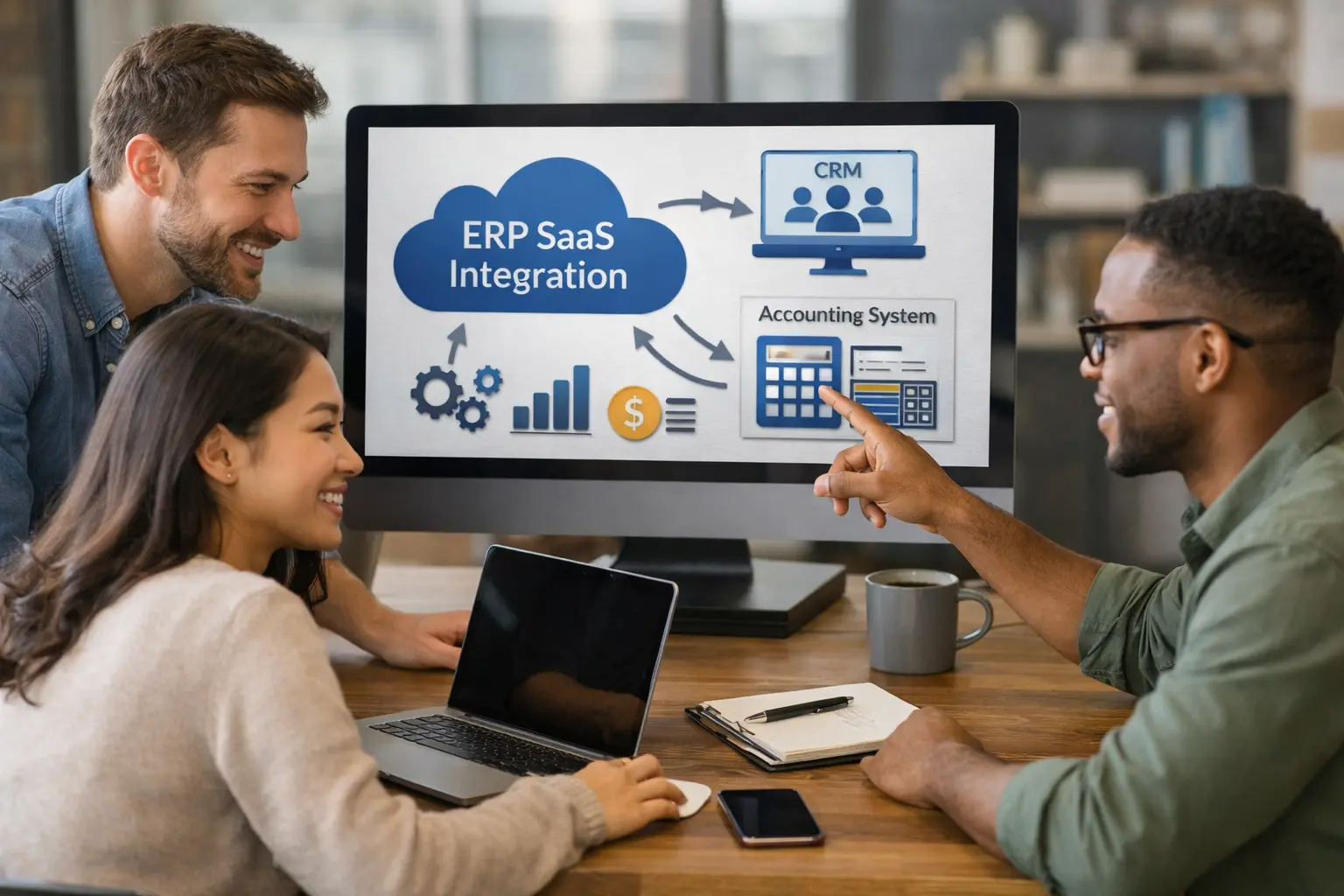
Ensure the ERP software integrates with your existing tools like CRM systems, payment gateways, and e-commerce platforms.
4. Customization
Choose ERP solutions that allow customization to meet specific business workflows.
5. Security
Security is essential since ERP systems store sensitive business data.
Benefits of ERP SaaS for Small Businesses
ERP SaaS platforms offer several advantages for small businesses.
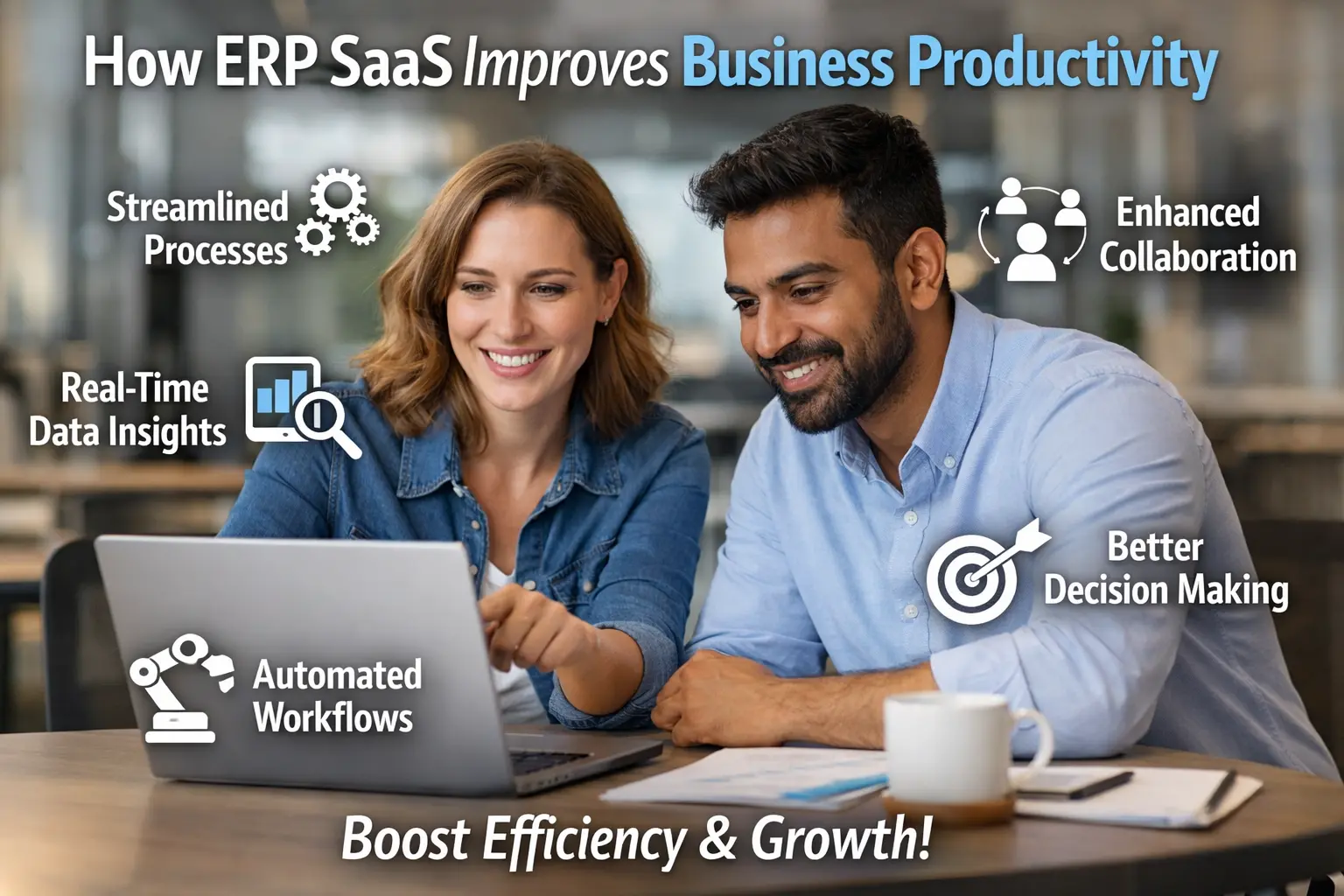
Improved Efficiency
Automation reduces manual work and increases productivity.
Better Decision-Making
Real-time analytics provide insights into business performance.
Centralized Data
ERP systems create a single source of truth for business data.
Enhanced Collaboration
Employees can access shared dashboards and collaborate across departments.
Cost Savings
SaaS ERP eliminates expensive hardware and maintenance costs.
Challenges of Implementing ERP SaaS
While ERP SaaS solutions offer many benefits, businesses may face challenges during implementation.
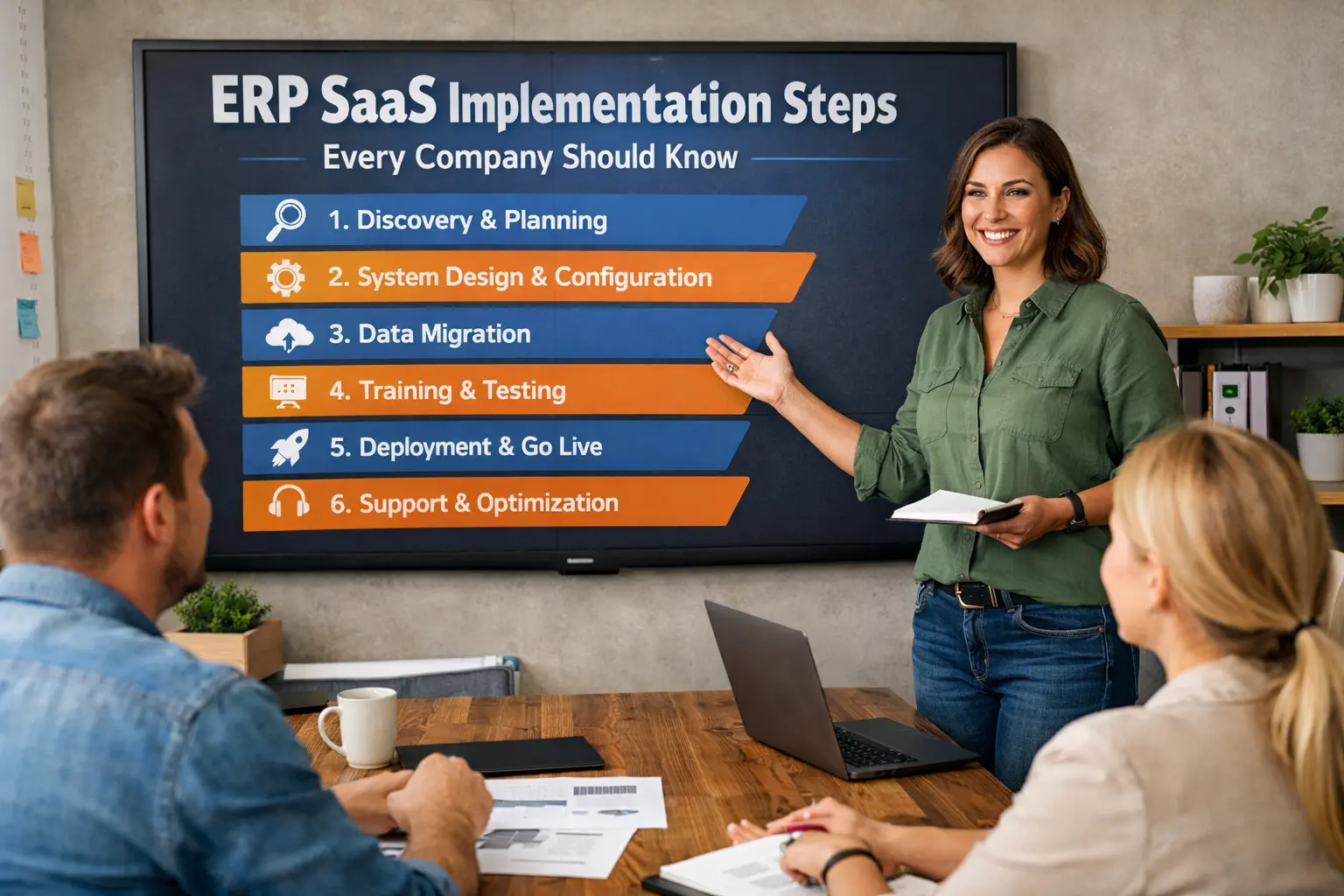
Data Migration
Migrating data from legacy systems to a new ERP platform can be complex.
User Training
Employees must learn how to use the new system effectively.
Integration Issues
Connecting ERP systems with other software may require customization.
Future Trends in ERP SaaS (2026 and Beyond)
ERP SaaS platforms are evolving rapidly with new technologies.
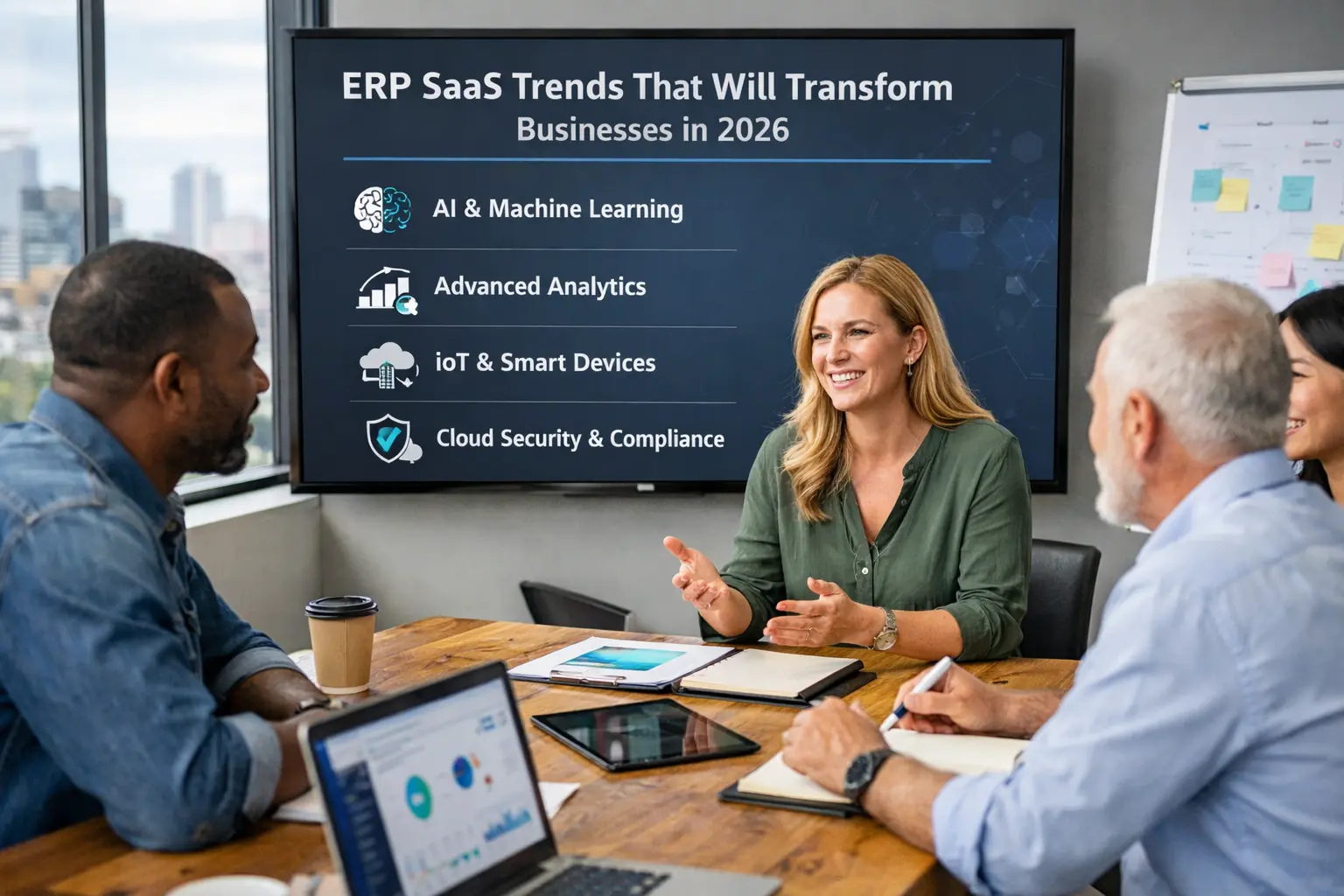
Artificial Intelligence Integration
AI enables predictive analytics and automated decision-making.
Automation and Robotics
Robotic Process Automation (RPA) reduces manual tasks.
Mobile ERP
Businesses increasingly manage operations through mobile devices.
Blockchain Integration
Blockchain improves transparency and security in supply chains.
Conclusion
ERP SaaS solutions are transforming how small businesses operate in 2026. By integrating finance, inventory, HR, and customer management into a single cloud platform, ERP SaaS systems help organizations streamline operations, reduce costs, and improve decision-making.
For small businesses seeking digital transformation, investing in the right ERP SaaS solution can provide a strong foundation for growth and scalability. Platforms like NetSuite, SAP Business One, Odoo, Microsoft Dynamics 365, Zoho ERP, Sage Intacct, and Workday offer powerful tools that enable businesses to manage operations efficiently in the cloud.
As technology continues to evolve with AI, automation, and advanced analytics, ERP SaaS solutions will become even more essential for businesses aiming to stay competitive in the modern digital economy.